
Understanding the Oklahoma Education Controversy
Recent events in Oklahoma’s education sector have sparked heated debate among educators, policymakers, and concerned citizens alike. At the center of this controversy is the claim that the state did not spend any money on a so-called “woke” test developed by PragerU for teachers moving from more liberal states. With former state schools superintendent Ryan Walters closely linked to the initiative and a series of conservative educational materials being promoted in the state, the unfolding events call for a closer look at the twists and turns involved in this tangled issue.
In this opinion editorial, we will get into the details of the controversy, exploring the tangled issues surrounding teacher certification, educational materials with political undertones, and related state and federal education policies. While opinions on the matter vary widely, it is important to examine the evidence and consider the broader context in which such testing came to be proposed.
Teacher Certification and the So-Called “Woke” Test
The regulatory framework governing teacher certification in Oklahoma is already replete with tricky parts. Before the controversy emerged, there was talk that teachers moving into the state from what some describe as “woke” states would be subjected to a specialized test. However, according to Oklahoma State Superintendent Lindel Fields, no state Department of Education contract exists with PragerU to administer such a measure.
Ryan Walters, who held his position for nearly three years, had actively promoted the use of curricula and materials developed by PragerU, encouraging schools to incorporate what he considered a “conservative” perspective in the classroom. PragerU, a nonprofit organization known for its conservative educational content, was purportedly tasked with developing a test that purportedly would evaluate teachers’ adherence to certain ideological standards.
Examining the Test Development Process
Even though the test emerged as a subject of intense debate, Superintendent Fields was quick to clarify that no state funds were allocated for its development. According to him, “there was no State Department money spent with PragerU.” This statement suggests that, although there were associations between Walters, PragerU, and the concept of a “woke test,” the actual development process did not involve state contracts or expenditures.
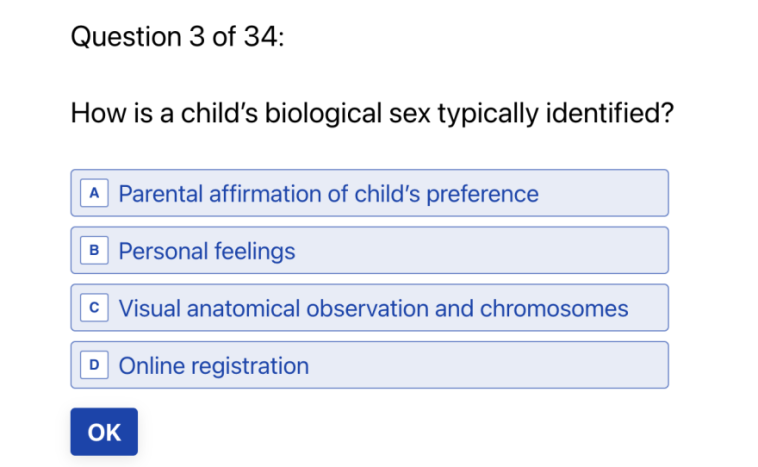
A closer look at the test reveals that it was designed to cover a range of subjects—from biology and gender identification to key aspects of civics, the U.S. Constitution, and historical events. The online format of the test required participants to answer 34 multiple-choice questions, each answer being predetermined by the test-makers. This design meant that participants could not move on to the next question until they selected what was seen as the “right” answer, effectively making the test such that failing was nearly impossible.
Details of the Digital Testing Experience
An examination of the testing interface unveils a number of interesting and somewhat controversial features:
- Mandatory personal information submission including name, address, email, and phone number.
- A design that locked participants into sequential questions until the predetermined answer was chosen.
- An incorporation of topics ranging from scientific biology queries to politically charged issues such as gender identification and interpretation of historical events.
This format, while framed by some as a method to ensure a basic level of knowledge in key areas, has been met with criticism by others who view it as an attempt to control or censor academic and political discourse among educators.
Politics, Public Opinion, and Educational Policy
The controversy over the test is not an isolated incident. Instead, it reflects larger tensions within American education policy, where state decisions often become loaded with political significance. This case has sparked a host of opinions, many of which point to a broader strategy involving state politics, educational standards, and control over ideological narratives in classrooms.
Assessing the Role of Partisan Politics
Political observers note that the push for a “woke test” is emblematic of the fine points of modern partisan maneuvering in education policy. Former Superintendent Walters was closely watched during his term as he promoted materials from PragerU, including cartoon videos that dramatized historical events in ways that many found questionable.
One notable instance includes a video featuring a character modeled after Christopher Columbus, which controversially suggested that “slavery is better than being killed.” Such content has led critics to argue that these materials injected a politically tinted narrative into the classroom, potentially influencing young minds beyond the traditional scope of history and civics.
Moreover, Walters’ decision to include PragerU’s cofounder, Dennis Prager, on his review committee for developing new social studies standards further convinced many observers that the initiative was part of a broader attempt to reshape educational content along politically conservative lines.
Implications for Education in Conservative Versus Liberal States
The issue has also reawakened discussions about how states with differing political leanings approach educational content and teacher certification. In states like California and New York, which are often described as having more progressive policies, critics of the proposed test argued that forcing teachers to pass such an assessment would amount to a direct political litmus test.
For educators, many of whom already face nerve-racking challenges in adapting to rapidly changing standards, the introduction of an ideologically charged exam introduces yet another intimidating hurdle. On the other hand, supporters see it as a key measure to ensure that educators share a specific set of values, which they believe is critical for maintaining a particular educational ethos.
Table: Comparative Perspectives on Educational Testing Initiatives
| Stakeholder | Key Perspective | Concerns/Benefits |
|---|---|---|
| State Administrators | Ensuring consistent quality across teacher certifications | Concerns about state funding and legal authority |
| Conservative Advocates | Using educational content to promote traditional values | Belief in countering progressive narratives |
| Progressive Educators | Maintaining academic freedom and balanced curricula | Fear of ideological bias and undue censorship |
| General Public | Transparency in how public funds and policies are managed | Demand for accountability and clarity from public institutions |
Funding and the Legal Challenges
Despite the controversy, it appears that Governor Kevin Stitt and the administration have taken steps to distance current policies from those implemented under Walters’ leadership. The removal of content related to the PragerU test from the Oklahoma State Department of Education’s website in the immediate aftermath of Walters’ resignation underlines a rapid attempt to steer away from controversial associations.
Legal challenges have also been part of this process. The Oklahoma Supreme Court’s decision to pause the enforcement of the new social studies standards—standards that noticeably include references to Christianity and claims disputed by many observers—illustrates the legal maze that state education departments must navigate. This legal backdrop is riddled with tension and loaded with issues about constitutional rights, fairness in teacher certification, and the proper use of public funds.
Understanding the Funding Controversy
It is critical to highlight that, as Superintendent Fields emphasized, no state funding was directed toward the PragerU initiative. This claim addresses a central worry among critics: that taxpayer money was being used to advance a political agenda without proper authorization. Whether one agrees with the underlying educational philosophy or not, the use of state funds for politically charged initiatives is a subject of continuous public scrutiny.
For state officials, the situation presents several tricky parts, including the need to clarify funding allocations, provide transparency in decision-making processes, and reassure the public that the education system is not being co-opted for political purposes.
Legal Framework and Education Policy
The legal framework that governs teacher certification in Oklahoma—and indeed in all states—contains many tangled issues. The idea of using tests to assess teacher qualifications is standard practice. However, setting up a test that includes ideological components goes well beyond assessing academic competence. In Oklahoma, state law clearly limits the Department of Education’s authority in relation to teacher licensing. By attempting to tie certification to an externally developed test, the initiative ran the risk of breaching these legal limits.
This scenario underscores the importance of having a robust legal and administrative system that can adapt to emerging policy trends while protecting the rights of educators and upholding constitutional standards.
Political Repercussions and Public Debate
The discussion surrounding the test has quickly evolved into a broader commentary on the role of politics in education. As education becomes an arena where political values are increasingly scrutinized, the situation in Oklahoma symbolizes the many twisted issues that educators, policymakers, and voters continue to get around.
Media Coverage and Public Perception
Media outlets have taken a keen interest in Oklahoma’s experience, with several national publications scrutinizing the role of initiatives introduced by former superintendent Walters. Analysts have pointed out that the controversy exposes small distinctions within the larger debate on how political values should be integrated into academic standards.
Key takeaways in the media discussions include:
- An emphasis on the absence of a formal contractual relationship between the state and PragerU.
- Critical analysis of the curriculum materials promoted by Walters, including cartoon depictions of historical events.
- The demonstration of how teacher licensing processes can quickly become entangled in political agendas.
Supporters of the initiative argue that ensuring educators are aligned with certain principles is a necessary step to protect traditional values, while detractors view it as an overreach that risks compromising the integrity of the education system.
Comparing Educational Approaches in Diverse Political Climates
Across the United States, education systems vary greatly. In states where progressive policies prevail, educators are accustomed to curricula that emphasize equality, diversity, and critical analysis of historical events. Conversely, in some conservative states, there is a push for curricula that stress traditional values and a more straightforward interpretation of American history and civic studies.
This debate is not without its risks. Introducing tests or standards with overt political connotations can lead to an environment where teacher certification is seen not solely as a measure of competence but also as a filter for political conformity. The result is an education environment loaded with issues that complicate the already overwhelming task of balancing academic freedom with state standards.
Exploring the Broader Implications for Education
The situation in Oklahoma provides fertile ground for discussion on how political ideologies intersect with state education policies. It raises several questions that need careful consideration:
How Do Political Agendas Influence Curriculum Development?
One of the most significant questions is whether political ideologies should influence how educational content is developed and administered. Ryan Walters’ approach of incorporating content from PragerU into classroom settings illustrates an attempt to mold educational content in line with a specific set of beliefs. This is a fine shade away from what many see as an essential commitment to maintaining nonpartisan, evidence-based curricula.
Critics argue that any measure that links teacher certification to an ideological test risks turning the classroom into a battleground where political beliefs become more important than academic inquiry. This, they say, can undermine public trust in educational institutions and create an environment where learning is secondary to political conformity.
Supporters, however, contend that it is super important for educators to share core values, particularly in subjects where historical events and social issues are discussed. For them, ensuring ideological consistency is a way of safeguarding traditional perspectives that they believe are vital for cultural and social stability.
The Role of State and Federal Oversight
The controversy also raises questions about the roles of state versus federal oversight in education. While education is primarily a state function under the U.S. system, federal guidelines and court decisions can influence best practices. The pause on the new social studies standards by the Oklahoma Supreme Court is a reminder of how legal oversight can act as a check on initiatives that may stray too far from statutory norms.
This interplay between state policy and judicial oversight exemplifies the tangled issues that often arise in education administration. When policy shifts take place swiftly—as they did with the removal of the PragerU test information from the state website—public confidence in the system can be affected.
Table: Key Considerations for Policy Makers
| Key Area | Tricky Parts to Consider | Potential Impacts |
|---|---|---|
| Teacher Certification Standards |
|
Ensures competence but may reveal ideological bias |
| Curriculum Development |
|
Can create educational disparity if not managed well |
| Legal and Regulatory Oversight |
|
Provides accountability but may slow policy innovation |
Deconstructing the Rhetoric: A Neutral Analysis
For those seeking to get into the nitty-gritty of this debate, it is important to separate political rhetoric from the actual policy decisions and their consequences. While questions about funding and ideological purity often dominate public discourse, what remains unclear are the ultimate impacts on the quality of teacher certification and the long-term effects on classroom teaching.
An unbiased look at the issues calls for acknowledging that educational policy, teacher certification, and curriculum development have always been areas rife with tiny twists and turns. Complicated pieces of the system are susceptible to pressures from both ends of the political spectrum, and many observers agree that the outcome should ideally benefit students while preserving academic integrity.
Points to Consider for a Balanced Perspective
A few points are worth keeping in mind as we work through the tangled issues:
- State funding for educational initiatives requires transparency to ensure there is no unintended ideological bias.
- Teacher certification policies must be based on objective criteria rather than external political tests.
- Curriculum development is most effective when it remains focused on comprehensive and balanced content that prepares students for the modern world.
- Political oversight in education should be applied carefully so that the educational system remains neutral and dedicated solely to academic advancement.
These bullet points serve as a reminder that while education is inevitably influenced by the political climate, preserving the essence of learning and academic freedom should be a super important priority.
Reflecting on the Past and Looking Ahead
The saga in Oklahoma is emblematic of the broader debates playing out across the country. The twists and turns involved in integrating politically charged educational materials, ensuring compliance with legal standards, and managing public perceptions are not unique to this one state. Similar controversies have arisen in several states where education has become a proxy for political battles.
As the debate continues, former initiatives like the PragerU test will likely serve as a case study in understanding how state education departments can be pressured into making off-putting policy choices. It also underscores the importance of having administrative systems that are both flexible enough to adapt to changes and firm enough to adhere to established legal requirements.
Future Directions: Balancing Ideological Perspectives and Educational Standards
Looking forward, policymakers and educators need to find a way to balance the competing demands of ideological expression and academic objectivity. The controversy in Oklahoma offers an opportunity to reexamine how teacher certification tests are developed and implemented. It is clear that integrating any political content into a certification test can have far-reaching consequences, potentially setting a precedent for further ideological interventions in public education.
Proposals to Improve Transparency and Fairness in Teacher Certification
To address the tricky parts uncovered by the PragerU test controversy, several proposals have been discussed by education experts and policymakers:
- Clear Funding Guidelines: Establish transparent guidelines about the use of public funds in the development of teacher certification materials. This measure would help dispel concerns about political influence and ensure that any testing is aligned with state-approved curriculum.
- Independent Oversight Committees: Create bipartisan committees to oversee changes in teacher certification tests and curriculum standards. These groups would include educators, legal experts, and community stakeholders dedicated to reviewing proposals for academic fairness.
- Public Consultations: Hold public forums and hearings to gather feedback from teachers, parents, and civic leaders. Actively seeking community input can help policymakers steer through tangled issues and create more widely accepted standards.
- Regular Policy Reviews: Schedule routine reviews of teacher certification tests and classroom curricula to ensure that they continue to meet modern educational needs without undue political bias.
These suggestions highlight a pathway to bridging the gap between differing political perspectives while ensuring that the core mission of education—to nurture knowledgeable, critical-thinking citizens—is not compromised.
Integrating Diverse Perspectives into Classroom Learning
Another key aspect of moving forward is acknowledging the value of diverse perspectives in education. In many ways, the debate over a politically charged test brings to light the tension between a standardized approach to education and the necessity for diverse viewpoints in the classroom. While a standardized test can help ensure that certain key facts and figures are known, it runs the risk of stifling the little twists of thought that can lead to innovative problem-solving.
Efforts to counter these risks might include:
- Encouraging district-level curriculum committees to include teachers from a variety of backgrounds.
- Organizing professional development workshops that focus on handling controversial topics impartially.
- Promoting peer review of new educational materials before they become part of state standards.
By ensuring that multiple perspectives are represented in how subjects are taught, educational leaders can help prevent the kind of one-sided approach that critics of the PragerU test have pointed to as deeply problematic.
The Role of Political Leadership in Shaping Education Policy
The rapid changes following Ryan Walters’ departure underscore the critical role that political leadership plays in shaping education policy. Governor Kevin Stitt’s appointing of Superintendent Lindel Fields and the swift removal of controversial content from the state’s website signal a desire by state leadership to step back from the controversy.
However, this move also raises important questions about continuity and consistency in education policy. For many stakeholders, it is nerve-racking to see significant policy shifts occur so rapidly without a comprehensive review process. Such rapid changes can create an environment where teachers, school administrators, and even students are left trying to figure a path through confusing bits of policy, rather than focusing on core educational goals.
Leadership Strategies for Restoring Public Trust
Restoring public trust in the education system is a super important task in the wake of these controversies. Some strategies recommended by experts include:
- Enhanced Communication: Open, transparent communication from state officials regarding policy changes and the rationale behind them is essential. Regular updates and detailed briefings can help reassure the public.
- Stakeholder Engagement: Actively engage teachers, parents, and community leaders to get their input on proposed changes. This collaborative approach helps smooth over some of the intimidating aspects of rapid policy adjustments.
- Review and Revision: Establish a clear timeline for reviewing controversial policies, complete with benchmarks and opportunities for public comment before final implementation.
Implementing these strategies would not only help head off potential legal challenges but also provide a framework for managing future debates that mix public education with politically loaded issues.
Conclusion: Charting a Course Through Troubled Waters
In conclusion, the controversy over the PragerU test in Oklahoma offers a lens through which to view the broader challenges facing American education policy. From the departure of Ryan Walters to the swift actions of state leadership, every step in the unfolding drama reveals more of the tricky parts involved in balancing political interests with educational integrity.
While it is clear that no state funds were used to finance the PragerU test, the very association with politically charged materials has left many stakeholders questioning the direction of current educational policies. As educators and policymakers continue to sort out the many implications of these developments, it is essential to remember that creating a balanced, fair system for teacher certification and curriculum development requires careful consideration of all the little details involved.
This episode is a stark reminder that educational policies are not just technical issues confined to the back rooms of state departments—they have direct, tangible impacts on the lives of teachers, students, and the communities they serve. By looking closely at the fine points of such controversies, stakeholders can encourage a public discussion that prioritizes transparent decision-making, accountable leadership, and a commitment to academic fairness.
The path forward may be full of confusing bits and nerve-racking challenges, but it is crucial that all parties involved work together to steer through these shadowy areas with an open mind and a commitment to safeguarding our educational system. Whether one sees the controversial test as a misguided ideological exercise or a necessary measure to protect cultural values, one thing remains clear: There is a pressing need to review how political beliefs are integrated into educational practices without compromising the essential mission of teaching.
Reflecting on Lessons Learned
As we take a closer look at the situation, several lessons emerge that could inform future policy decisions:
- Transparency is key: Public trust can only be built through clear, open communication about policy decisions and funding allocations.
- Balanced perspectives matter: Incorporating a variety of views in curriculum development can prevent policies from becoming overly one-sided.
- Legal clarity prevents missteps: Adhering to statutory guidelines and involving independent oversight can help avoid the tangled issues that arise from politically loaded initiatives.
- Community engagement strengthens accountability: Regular consultation with teachers, parents, and community leaders ensures that the education system remains responsive to the needs of all stakeholders.
The debate over the PragerU test in Oklahoma is more than just a momentary political skirmish. It symbolizes the broader tensions at play within our education system—a system that must continually adjust and evolve while safeguarding the principles of fairness, academic freedom, and public accountability.
Final Thoughts
In the end, whether the controversy is seen as a defensive reaction to progressive policies or as an overreach of conservative ideology, it underscores the importance of maintaining a clear separation between politics and pedagogy. As state leaders and educators move forward, ensuring that teacher certification and curriculum standards are determined by objective criteria rather than ideological tests should remain a critical goal.
Policymakers would do well to take the mixed reactions to the PragerU test as a learning opportunity—a chance to reexamine the priorities of the education system in a way that benefits students, respects the professional integrity of teachers, and sticks to the core mission of public education.
Ultimately, the fate of education in Oklahoma—and indeed across the country—will depend on our collective ability to manage our way through the tangled issues of policy, ideology, and pedagogy. By focusing on transparency, fairness, and a balanced approach to curriculum development, we can work together to forge an educational future that offers real value and meets the needs of all communities.
Originally Post From https://www.oklahoman.com/story/news/education/2025/10/28/ryan-walters-oklahoma-prager-u-woke-test-for-teachers/86934382007/
Read more about this topic at
Exclusive: Oklahoma to begin controversial test to weed …
I took Ryan Walters’ so-called ‘woke’ test for …