
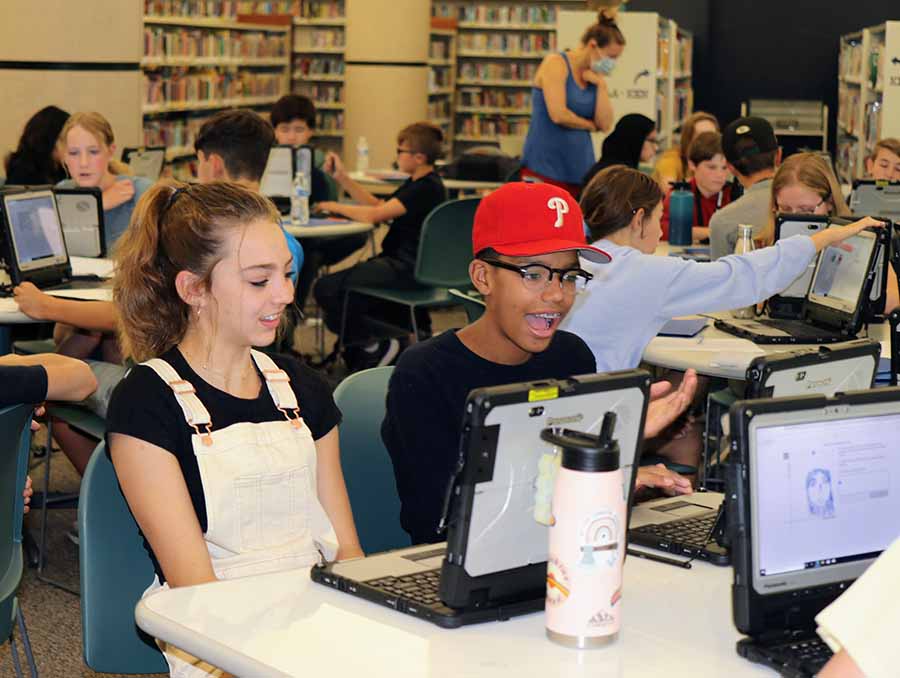
Examining Nevada’s Innovative Approach to Early STEM Exposure
The Nevada Math & Technology Camp, now celebrating its 26th anniversary, stands as a remarkable example of how early exposure to mathematics and technology can shape a young student’s journey into the world of STEM. Spearheaded by the College of Education & Human Development, this unique residential camp is designed for middle school students in the 7th and 8th grades and operates with a clear vision: equip students with the skills and confidence to pursue careers in STEM fields. As someone who has followed the evolution of educational initiatives for years, I find this program to be both a standout innovation and an empowering tool for future generations.
In an era where making your way through the tricky parts of education can be overwhelming, this camp offers a safe harbor that helps students not just learn but also develop a deep-seated enthusiasm for STEM. Rather than being an intimidating start, it transforms what could be complicated pieces of academic content into an inspiring journey towards professional and personal growth.
Middle School STEM Camp Experiences: Laying the Foundation for Future Success
The camp, which annually hosts about 50 middle school students, provides an opportunity for these young individuals to get into STEM learning in a hands-on, immersive environment. In an educational landscape replete with confusing bits and tangled issues, such initiatives offer a structured yet inviting avenue to explore mathematical principles and technological competencies.
For many middle schoolers, these formative years are crucial. It’s at this stage that they begin to grapple with making decisions about the subjects they should focus on, and what academic paths might help them realize their career dreams. Through carefully designed coding projects, geometry challenges, spatial reasoning exercises, and data analysis activities, the camp creates an arena where little twists of academic thought meet practical application.
Transforming Learning Through a Residential Camp Model
There’s something uniquely effective about a residential camp when it comes to engaging young minds. Unlike the traditional school environment, a camp setting fosters collaboration and creativity in an off-putting landscape that might otherwise be filled with the rigors of standard classroom instruction. Here are some of the benefits that such a model brings:
- Immersive Learning Environment: With a dedicated one-week schedule, students are able to live and breathe STEM subjects in an environment tailored to their intellectual curiosity.
- Focused Attention: The low student-to-teacher ratio means that each participant receives attention that can help build a strong grasp of critical and super important academic concepts.
- Peer and Mentor Support: Learning alongside peers who share similar interests and challenges boosts confidence and helps normalize the daunting twists and turns involved in understanding STEM.
These experiences prove to be instrumental over time, as students not only build technical competence but also develop a healthier attitude toward learning challenges. The benefits of such an educational model resonate well beyond the week-long camp, empowering students to take charge of their academic futures in the midst of competing interests and potential distractions.
Impact of Residential Math and Technology Camps on Future STEM Careers
By providing middle school students with an authentic and engaging way to interact with STEM subjects, the camp sets the stage for a future career pipeline that is vibrant and filled with innovators. The thoughtful design of the curriculum, spearheaded by Lynda Wiest, Ph.D., who has led the camp since its inception, and Heather Crawford-Ferre, Ph.D., further enhances this approach by aligning the curriculum with industry-relevant skills and emerging technology trends.
Students are given the opportunity to work on real-world problems that mirror the challenges seen in today’s technology-driven economy. For instance, while younger students get their first taste of coding through platforms like Code.org, their older counterparts dive in deeper with algebra and graphing activities using tools such as Desmos. This differentiated approach ensures that instruction is appropriately challenging while remaining accessible.
One of the standout components of the camp is the emphasis on nurturing a positive attitude toward STEM. According to Wiest, much of the program’s success lies in altering how young students perceive STEM subjects – making them seem less intimidating and more within reach. This revised mindset is crucial in an educational system where many youngsters can feel overwhelmed by the nerve-racking prospect of tackling challenging material.
Building Confidence Through Real-World Applications
The camp’s curriculum is built around the idea that the confidence to solve problems often begins with understanding the fine points of practical applications. The mathematics lessons are not presented as abstract, isolated concepts but are tied with real-life functions. For example, a coding project in a computer lab not only teaches the syntax of a programming language but also highlights the many ways technology can serve as a tool for solving everyday problems.
This method of teaching transforms the learning process into something tangible. Students start to see themselves as capable of mastering subjects that are typically seen as too complicated, which can be especially empowering in a context where many might feel that STEM ideas are just out of reach.
As one student put it, the experience allowed them “to be free to answer how you want to… without fear of judgment.” This testimonial reinforces the value of having a learning environment that is both supportive and challenging, ensuring that every student can find their own path to success.
Enhancing Student Engagement with Practical STEM Learning
The educational approach embraced by the camp is focused on engaging students in hands-on activities that take them beyond the theoretical. In a world where schooling is often riddled with tension and limited by rigid curriculums, such interactive experiences provide the key to unlocking a more dynamic, creative learning process.
Every element of the camp’s program has been meticulously designed to help students get around the tricky parts of conventional classroom instruction. The topics selected by Dr. Wiest have remained largely consistent over the years because they address both the immediate academic needs and the longer-term career aspirations of the students.
What’s more, the camp’s outreach extends to all students, including those who might not have previously considered a future in STEM. Through engaging lessons and encouraging role models, the camp pushes past the nerve-racking initial hesitations and opens up a world filled with possibilities.
Effective Curriculum Design and Its Role in Shaping Young Minds
The curriculum itself is an exercise in strategic planning and understanding the subtle parts that influence learning. It focuses on core subjects such as:
- Mathematics Fundamentals: By focusing on problem solving, geometry, and spatial reasoning, the curriculum lays a foundation critical for any STEM field.
- Data Analysis and Coding: Integrating data analysis and introductory coding provides an understanding of the digital environment that surrounds us.
- Graphical Representations and Algebra: These subjects are introduced as tools that make the abstract more accessible, thereby boosting student confidence.
Each of these subjects is taught with an emphasis on practical application, ensuring that students not only learn the theory but also understand its importance in everyday life, setting them up for future success in technological fields.
Promoting a Safe and Inclusive Environment for Learning
A critical element of the camp’s continuing success lies in its dedication to creating a safe space—one where students feel comfortable expressing themselves and experimenting with new ideas. This emphasis on a secure atmosphere stands in stark contrast to many traditional educational settings, which can sometimes be intimidating or nerve-racking for younger students.
In this camp, the open and non-judgmental approach allows kids to explore without fear of making mistakes. This liberating environment is particularly crucial when dealing with subjects that have historically been seen as off-putting. Instead of assessing each mistake as a failure, the curriculum encourages students to see each error as a stepping stone toward mastery.
The absence of harsh criticism and the presence of supportive mentors help ensure that students leave the camp with their confidence boosted and their perceptions of STEM forever changed.
Strategies for Creating an Inclusive STEM Learning Culture
From an educator’s point of view, implementing strategies that make learning inclusive and accessible is super important. Here are a few approaches that the camp uses to achieve this goal:
- Encouraging Open Dialogue: By fostering a conversational atmosphere, students are more willing to share their thought processes and ask questions without feeling intimidated.
- Peer Mentoring Programs: Older campers often serve as role models for younger peers, illustrating that mastery of STEM subjects is a realistic goal through consistent support.
- Tailoring Learning Approaches: Recognizing that every student has unique learning needs, instructors have the flexibility to modify lessons and give personalized feedback.
These efforts not only help students conquer the complicated pieces of STEM topics but also prepare them for a future academic life where such inclusive methods can foster continuous growth and exploration.
Long-Term Impacts: Shaping Nevada’s Future Workforce in STEM
The camp’s influence is not merely confined to improving test scores or increasing interest in STEM; it also plays a critical role in shaping the future workforce in Nevada. With many participants ultimately pursuing higher education in related fields, the program contributes to a broader initiative aimed at keeping promising talent within the state.
Nevada, like many other states, faces the challenge of ensuring that its local industries have access to a steady stream of highly skilled professionals. By inspiring middle schoolers to think about STEM early on, the camp helps build a pipeline of talent that will eventually address the needs of burgeoning local industries.
Given the current competitive job market, such forward-thinking initiatives are more than just educational programs—they are crucial investments in the future. As the camp continues to evolve and adapt its curriculum in tune with emerging technology trends, its role in developing Nevada’s next generation of STEM professionals remains indispensable.
State and Federal Education Policies: Aligning with Broader Initiatives
It is worth noting how well the camp aligns with both state and federal education policies geared toward the promotion of STEM fields. Over the years, policymakers have increasingly recognized the need to introduce STEM education early in life. As federal initiatives push for innovative education models, programs like Nevada’s Math & Technology Camp stand on the front lines in addressing these goals.
This integrated approach can be seen in several ways:
- Policy Alignment: The camp’s curriculum reflects state educational standards and is frequently updated in accordance with federal guidelines on STEM education.
- Collaborative Leadership: The camp benefits from the joint leadership of prominent figures in education, who work closely with state departments to ensure that the content remains current and relevant.
- Long-Term Vision: Programs of this nature support larger strategies aimed at reducing summer learning loss and ensuring that students remain engaged throughout the academic year.
By integrating these factors, the camp not only boosts individual student confidence and competence but also reinforces a broader commitment to nurturing innovative talent while keeping local professionals within Nevada.
The Role of STEM Camps in Combating Summer Learning Loss
Summer learning loss is a persistent challenge that many educators grapple with every year. Traditional school vacations can sometimes lead to a regression in academic skills, and the consequences of this can be worrying. In contrast, the Nevada Math & Technology Camp acts as a bulwark against the waning of learned skills during the summer months.
The intensive week-long schedule means that students are exposed to super important instructional content during a period where many would otherwise be disengaged. This continuous engagement ensures that the knowledge acquired during the typical school year is not only maintained but also expanded upon.
Moreover, the camp’s focus on hands-on activities makes the learning process feel less like a chore and more like an exciting adventure. The practical nature of the lessons means that students are actively applying what they have learned in ways that make sense in the real world, thus minimizing the effects of summer learning loss through consistent practice.
Evidence-Based Benefits of Continuous STEM Engagement
Research has shown that when students continue to work on academic subjects during the summer, the negative impact of the break is significantly reduced. Here are some evidence-based benefits that stem from such continuous engagement:
- Skill Retention: Repeated exposure to mathematical and technological concepts improves retention rates and makes the transition back to school smoother.
- Confidence Building: Consistent practice in a supportive environment enhances self-confidence, which, in turn, influences how students approach new academic challenges.
- Long-Term Academic Success: Students who participate in extended learning programs tend to perform better upon returning to school, setting the stage for continued academic growth.
The Nevada Math & Technology Camp not only mitigates learning loss but also fills the summer with constructive activities. This dual benefit underscores the camp’s long-term positive impact on students’ academic trajectories.
Unpacking the Hidden Complexities of STEM Education
While the successes of the camp are clear, it is important to acknowledge some of the tangled issues and twists and turns that come with introducing STEM concepts to younger learners. Not every student finds it easy to get around these challenges—indeed, the path to true comprehension can sometimes be full of problems and nerve-racking obstacles.
One of the significant challenges is ensuring that the content is both accessible and appealing. Traditional classroom methods can often be intimidating, so programs like this camp must work hard to support the subtle parts of academic content that are frequently overlooked. In many ways, the camp succeeds by taking a closer look at these fine points and adapting them to be as engaging as possible.
Addressing the Confusing Bits in STEM Concepts
For many students, the initial encounter with technical topics can be overwhelming. To figure a path through this maze, the camp employs several strategies:
- Interactive Learning Tools: The use of platforms like Code.org and Desmos transforms abstract ideas into interactive projects that students can manipulate and understand.
- Step-by-Step Instruction: Instructors break down complicated pieces of content into manageable segments, helping students to digest the subject matter piece by piece.
- Peer Collaboration: Working in groups allows students to share ideas and learn from each other’s experiences, making the process less intimidating overall.
By working through these strategies, the camp manages to demystify many of the hidden complexities that can otherwise deter young learners from pursuing STEM subjects enthusiastically.
The Broader Implications for Education Policy and Community Development
Looking beyond the immediate benefits for the students, the success of the Nevada Math & Technology Camp has broader implications for both state and federal education policy. It serves as a beacon of how tactical, hands-on learning initiatives can be integrated into larger educational frameworks, setting a precedent for similar programs across the country.
Government policymakers, educators, and community leaders increasingly see the value in redirecting efforts toward educational models that are both innovative and grounded in real-world applications. For instance, the data-driven approach used in the camp provides a model for how summer programs can be designed to counteract learning loss and simultaneously foster an interest in STEM careers.
The ripple effects of these innovative approaches are significant. They encourage a more diversified educational policy initiative that not only aims to boost academic performance but also nurtures the overall confidence and well-being of students. In doing so, these programs provide a strong foundation from which future education policies can be built.
Policy Recommendations to Support STEM Initiatives
Taking into account the success of this camp, here are some forward-looking suggestions for policymakers and educational leaders:
- Increased Funding: Allocating more resources for early STEM initiatives can help expand these programs to serve a larger demographic, particularly in underrepresented communities.
- Curriculum Innovation: Encouraging continuous development and adaptation of curricula will ensure that educational content keeps pace with rapid technological advancements.
- Community Collaboration: Fostering partnerships between educational institutions, local government, and the private sector can create more opportunities for students to engage with STEM topics outside simple classroom settings.
- Mentorship Programs: Strengthening mentorship initiatives by including role models from various STEM fields can help sustain interest and provide practical guidance for future education and career choices.
These recommendations, if implemented, have the potential to transform early STEM education not just in Nevada but across the nation. By doing so, they secure a future where more students are equipped to manage their way through the tricky parts of their academic journeys and flourish in competitive, innovative industries.
Reflections on the Legacy of the Camp and Its Future Trajectory
As we look to the future, the enduring legacy of the Nevada Math & Technology Camp offers a hopeful glimpse into the power of specialized educational programs. By instilling a love of STEM early in life, the camp lays the groundwork for continual academic and career success—a commitment that is both super important and essential in today’s fast-paced world.
Reflecting on the stories of countless students who have participated in the camp over the years, it’s clear that this initiative does more than teach math and technology. It transforms attitudes and rebuilds self-confidence, paving the way for students to see themselves as capable problem-solvers within a supportive and encouraging community.
One cannot help but admire how the program has remained steadfast in its mission over the decades, continually adapting to meet the needs of a changing world while maintaining its core values. Its influence is evident in every success story, every new discovery, and every individual who moves forward with a renewed sense of purpose and ambition in the realm of STEM.
Looking Ahead: The Future of STEM Camps in Nevada
With the rapid pace of technological advancement, the importance of early STEM education is only set to increase. As we move further into the digital age, the groundwork laid by camps like this becomes ever more critical. Future iterations of the program may well include emerging fields such as robotics, artificial intelligence, and advanced data analytics, ensuring that students are not only prepared for today’s challenges but are also equipped to meet the demands of tomorrow.
The future trajectory of such initiatives could also help to narrow the gap in educational opportunities between urban and rural communities, making high-quality STEM education accessible to all students, regardless of their geographical location. This, in turn, holds the potential to fuel regional economic growth, foster innovation, and create a more technically proficient workforce ready to tackle the subtle parts of tomorrow’s technological challenges.
Conclusion: A Model for Educational Excellence and Community Transformation
The Nevada Math & Technology Camp ultimately exemplifies how early, engaged, and hands-on STEM education can be a game changer for students at a crucial phase of their academic development. By reimagining the delivery of challenging subject matter and providing students with tangible, real-world applications of mathematics and technology, this initiative builds not just academic skills but also the confidence to explore and innovate.
In summation, the camp’s success is not measured solely by the academic achievements of its participants, but also by the transformation of their attitudes and the new possibilities they see before them. It is a testament to what can be achieved when educators, policymakers, and communities come together to champion a future where every young person is given a fair chance to explore the immense world of STEM.
By fostering environments that are supportive, safe, and geared towards demystifying the challenges of STEM content, we pave the way for a richer, more diversified talent pool. One that is fully prepared to steer through the tricky parts, overcome the nerve-racking challenges, and ultimately drive forward the innovative spirit that has long been the hallmark of scientific and technological discovery.
As we celebrate the legacy and look forward to the future, programs like the Nevada Math & Technology Camp remain a shining example of the educational excellence that is possible when practical learning and inspiration converge. They underscore an essential truth: the right blend of guidance, opportunity, and creativity can dramatically reshape the landscape of education, ensuring that every student has the support they need to succeed not just in school, but in life.
In a rapidly changing world, initiatives such as this do more than bridge the gap between abstract mathematical theories and real-world applications; they create a community where early exposure to STEM sets the stage for lifelong learning, meaningful career choices, and a resilient, innovative future. As we continue to observe and invest in these transformative programs, we recognize that the future of education—and by extension, the future of our communities—rests on the foundation of informed, inspired, and empowered young learners.
It is my hope that as more states and educational institutions embrace similar approaches, we’ll see a continued rise in accessible, engaging, and effective STEM education. Only then can we truly appreciate the power of turning what might seem overwhelming and intimidating into an inspiring, open, and dynamic journey that invites every curious mind to explore, understand, and ultimately succeed.
Originally Post From https://www.unr.edu/nevada-today/news/2025/math-camp
Read more about this topic at
Empowering Future Innovators
Empowering future innovators in week four of Summer …

