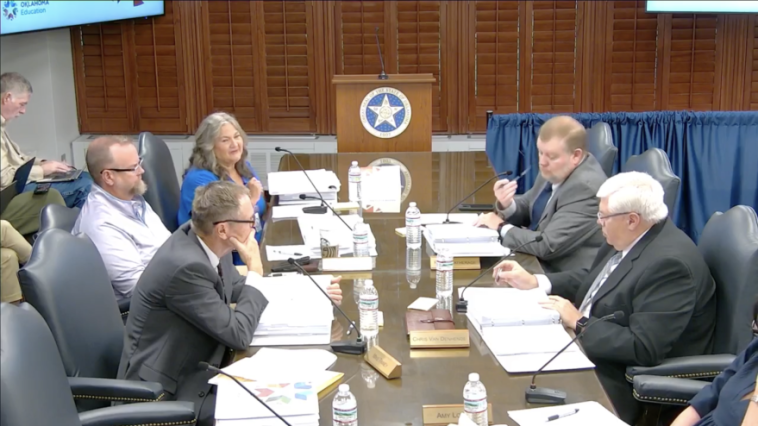

Examining the Procedural Error in Student Transfer Decisions
The recent controversy involving the Oklahoma State Board of Education has sparked a heated debate about the state’s approach to student transfer policies. This case, involving the reversal of school districts’ decisions on student transfers, exposes a tangled web of administrative missteps and confusing bits of policy that have significant implications for local educators, families, and the state’s future education landscape.
At the heart of the dispute is the board’s decision to overturn the initial rejections by Jenks and Bristow Public Schools of transfer applicants. Both districts had denied transfer requests from two students based on disciplinary concerns and related factors. When the involved families took the matter to the state board, a decision was made to allow the transfers, only for the board to later concede its error. This move has opened the door to legal battles, raised questions about the proper application of state transfer laws, and highlighted the challenging parts of dealing with procedural missteps in educational policy.
Understanding the Student Transfer Policy Challenges
The issues surrounding student transfers are anything but straightforward. At its core, state law permits school districts to deny a transfer request for several reasons, including disciplinary incidents, poor attendance, and capacity constraints. These guidelines appear clear on paper, yet in practice, the fine points often become tangled. For instance, when behavioral concerns are pitted against a student’s right to continued education, the decision-making process can become intimidating for school administrators tasked with balancing justice, safety, and academic opportunity.
This case exemplifies the overlapping responsibilities between local school districts and the state board. On one hand, districts like Jenks and Bristow claim that their actions were legally justified and aligned with state transfer laws. On the other hand, the state board’s intervention and subsequent reversal of the districts’ decisions have left many feeling that the process was full of problems, lacking the transparency necessary to maintain public trust.
- Local school districts operate under policies that allow for the denial of transfers if a student has a serious disciplinary record or if the school is at full capacity.
- The state board, acting as a higher authority, is expected to ensure that local policies comply with broader state laws and constitutional guarantees.
- The reversal of decisions by the state board has raised concerns about overreach and the potential undermining of district autonomy.
These issues are particularly challenging because they force all stakeholders to figure a path through a process that is supposed to be clear-cut but is instead riddled with tension due to the competing demands of legal mandates, ethical considerations, and logistical challenges.
Analyzing the State Board’s Procedural Mix-Up
The crux of the current dispute lies in the state board’s admission that it made a procedural error when deciding to overturn the districts’ initial transfer rejections. This admission not only casts doubt on the board’s decision-making process but also poses questions about procedural accountability and transparency in education governance. Digging into the details reveals a series of confusing bits and hidden policy mixes that need careful scrutiny.
In this particular instance, nearly half of the board’s membership had changed since the original decision was made. This turnover may have contributed to the nerve-racking ambiguity in understanding what the board’s stance actually was, and whether the decision reflected a comprehensive, well-thought-out policy or merely a quick fix to appease legal pressure. The admission of a procedural error suggests that internal protocols may have been overlooked or misinterpreted during the decision-making process, leaving school districts and families to navigate a policy landscape that now appears far more complex than originally intended.
Breaking down the issues gives rise to several key questions:
- What exactly went wrong in the board’s handling of the transfer decisions?
- Were there shortcomings in how the board communicated its policy guidelines?
- How can such errors be prevented in the future to ensure both district autonomy and consistent policy execution?
These questions are not merely academic; they touch upon the fine points of administrative law as applied to education and underscore the importance of steering through the maze of regulatory processes with due diligence.
The Legal and Administrative Ripple Effects
This controversy has broader legal implications that extend well beyond the confines of student transfer policies. When state policies are reversed due to procedural errors, it creates a ripple effect that can undermine confidence in the integrity of state institutions. One of the untoward consequences of such decisions is the erosion of trust between local school districts and the state board, a dynamic that is critical for the smooth functioning of educational governance.
In this case, both Jenks and Bristow Public Schools raised lawsuits against the state board, arguing that its decision was arbitrary and capricious—using legal terminology to describe a process that seemed to ignore the little twists of local policy and family needs. The legal battles not only have significant financial implications for the state but also require a reexamination of oversight mechanisms. If procedural errors can lead to large-scale reversals in policy, then ensuring the correctness of board actions becomes all the more essential.
The legal fallout of this decision is a wake-up call. It demonstrates the importance of clear, consistent procedures in decision-making. It also emphasizes the need for education policymakers to find a balance between upholding state laws and allowing districts the freedom to act within their local context. The ongoing lawsuits function as a form of public accountability, where both the school districts and the state board must show that they can manage their responsibilities without falling into the trap of procedural shortcuts.
Examining the Tensions Between Local Control and State Oversight
One of the most interesting aspects of the current controversy is the tension between local control and state oversight in education policy. School districts are charged with making decisions that directly affect the day-to-day lives of students and families. However, when a dispute arises, the state board is expected to serve as an impartial arbiter, ensuring that district actions adhere to state and federal laws.
This dual system creates situations where local administrators must figure a path through a maze of guidelines while remaining alert to potential intervention from higher authorities. The transfer decision controversy exemplifies this predicament. Local officials in Jenks and Bristow faced an overwhelming challenge—balancing the disciplinary concerns that justified their initial denial of transfers, against the priority of ensuring that students’ educational rights are protected.
For many educators and policy experts, this instance is a clear indicator that tighter, more consistent communication and operational procedures are needed between local districts and the state board. When each level of governance understands and respects the reasoning behind decisions, the room for misinterpretation and procedural error diminishes significantly. The case suggests a need for improved dialogue and better-defined responsibilities to ensure that decisions made at the local level are both legally sound and operationally feasible, without unnecessary state interference.
This issue can be broken down into several facets:
- Local Autonomy: Districts like Jenks and Bristow pride themselves on making decisions that reflect the unique demands of their student populations. Autonomy is seen as key to addressing local challenges with tailored solutions.
- State Oversight: The state board’s role is to ensure that the policies applied locally are consistent with broader legal mandates and constitutional rights. However, this oversight must be exercised carefully to avoid undermining district-level expertise.
- Mutual Accountability: Both levels of governance have areas of expertise that complement one another. Ensuring mutual accountability through regular reviews and clear communication is essential.
Impact on Students and Families: The Human Element
While much of the discussion focuses on legal responsibilities and administrative procedures, it is important to remember that behind every policy decision are students and families whose lives are deeply affected. In this particular case, the dispute centers on two students whose requests to stay enrolled through a transfer became the battleground for larger legal and policy issues.
For families, the decision to deny or allow a transfer encompasses more than just academic logistics—it touches on the stability and continuity of a child’s educational journey. The initial decision by the districts to deny the transfers was defended on the basis of addressing behavioral issues. However, the state board’s reversal, later acknowledged as the result of a procedural error, left those families in a state of uncertainty.
From the perspective of parents and guardians, this situation has been both stressful and off-putting. They were caught in the crossfire of administrative decision-making, legal maneuvering, and conflicting interpretations of state laws. The families experienced a nerve-racking process, where the seemingly simple matter of staying enrolled at a trusted school evolved into a legal battle full of twisted procedures and mixed messages.
To properly consider the human impact of such decisions, stakeholders must take note of the following:
- The Importance of Clear Communication: Families must receive straightforward, reliable information about the status of any transfer request, as mixed messages can lead to undue stress and confusion.
- Balancing Discipline and Opportunity: While disciplinary measures are necessary to maintain order and safety, they should be balanced against the long-term educational interests of the student.
- Seeking Mediation: Schools and state boards should consider setting up mediation processes to resolve conflicts before they escalate into legal disputes.
Only through understanding and addressing these human elements can policymakers hope to create an environment where educational decisions are made with both legal fairness and compassionate consideration for those impacted.
Reflecting on the State Board’s Decision-Making Process
The state board’s ultimate decision to dismiss its previous ruling on the transfer request highlights several areas where policy and procedure can be improved. By admitting its error, the board has taken a crucial step toward transparency and accountability, yet the episode remains a reminder of how easily procedural lapses can compromise the integrity of decision-making processes.
Looking into the board’s internal discussions reveals that the decision did not arise in a vacuum. It was influenced by subtle details of procedural missteps and a changing composition of board membership, which in itself is a tricky part of policy continuity. When nearly half of a board’s membership changes within a short span, ensuring consistency in decision-making becomes a challenging—sometimes intimidating—task.
The decision to reverse the earlier ruling—initiated in June 2024—was aimed at reconciling conflicting interests between local district policies and student rights. However, the admission of a procedural error casts doubt on whether the board’s revised decision was truly the product of a thorough, unbiased process or merely a reaction to emerging legal challenges.
This incident can act as a case study for improving the current system:
| Issue | Current Challenge | Potential Improvement |
|---|---|---|
| Board Turnover | Inconsistent membership affecting decision continuity | Implement standardized training and onboarding for new members |
| Procedural Clarity | Confusing bits of process leading to errors | Draft clear operational guidelines and checklists |
| Communication | Lack of clear communication with school districts and families | Establish regular briefings and transparent documentation |
| Legal Oversight | Arbitrary application of policies seen as capricious | Create a review committee to oversee compliance with state laws |
Each of these points underscores the need for better coherence and a more thoughtful approach to handling critical decisions. As policymakers navigate this tangled situation, the importance of adhering to established protocols becomes even more evident—especially in a system where small missteps can have far-reaching consequences.
Broader Implications for Education Policy in Oklahoma
This incident is not isolated—it is a reflection of broader issues in Oklahoma’s education policy. The current controversy accentuates the challenges that arise when local decision-making meets the towering expectations of state oversight. The case demonstrates the necessity for a more collaborative framework, where local districts and state boards work in tandem to address the fine points of education law.
Policy analysts emphasize that in order to improve the transfer process, there must be:
- Regular Review of Transfer Guidelines: Both local districts and the state board must consistently review and update transfer guidelines to reflect contemporary challenges.
- Enhanced Training for Decision-Makers: Officials at both levels need continuous training to understand the little details of legal requirements and procedural norms.
- Stronger Conflict Resolution Mechanisms: Establishing mediation sessions or advisory panels to address disputes early can reduce the incidence of legal battles.
- A Clear Chain of Accountability: It is crucial that every decision is well documented and that the responsibility for errors is clearly assigned, ensuring that similar issues in the future can be swiftly remedied.
These proactive measures are key if Oklahoma is to move forward. By addressing the tricky parts and confusing bits of the current situation, state educational leaders have a chance to set up a framework that provides both structure and flexibility for addressing the diverse needs of students. Unfortunately, the current controversy has instead highlighted the tangled issues that can arise when processes are not thoroughly vetted, leaving educators and families caught in the crossfire.
Future Directions: Finding Your Path Through Policy Overhaul
Moving forward, it is critical that both the state board and local school districts sort out their roles more clearly, enabling them to make decisions that are not mired in ambiguity or procedural errors. As this case illustrates, finding your path through complex decisions requires more than reactive measures; it calls for a proactive stance on policy revision. Stakeholders on all sides in this debate must work together to develop systems that reduce the risk of future errors and better protect the interests of students and the community.
Some possible future directions include:
- Establishing a Joint Oversight Committee: Create a panel that includes representatives from local school districts, the state board, and parent associations. This committee would oversee transfer decisions and ensure adherence to updated procedural standards.
- Improving Documentation Processes: By adopting modern documentation and tracking systems, both local and state education offices could record each step of the decision-making process, making it easier to spot and correct errors.
- Regular Public Forums: Hosting open meetings where educators, policymakers, and community members can discuss transfer policies would help build trust and transparency.
- Increased Training and Professional Development: Frequent workshops and training sessions that focus on state policies and legal requirements will help district and state officials get around tricky parts and avoid future procedural missteps.
These initiatives are not merely administrative fixes; they are super important steps toward regaining the trust of the public, ensuring that educational policy is managed in a way that respects both the letter and the spirit of the law.
Community Reaction and the Path to Reconciliation
The reactions from various community members and educational stakeholders have been mixed. Many local educators express relief that the board has acknowledged its error, viewing it as a sign that even large institutions can admit when they have made a mistake. However, there is also a sense of disillusionment among some families and administrators who believe that the board’s intervention, despite being well-intentioned, has muddied the waters of local control.
Community leaders argue that open dialogue between the state and local levels is essential. They stress that without a robust mechanism for addressing misunderstandings and procedural errors, the trust between communities and educational institutions will continue to erode. In this context, the state board’s admission should be seen as an opportunity—a starting point for meaningful reforms that could bridge the gap between local autonomy and state oversight.
A few key points that have emerged from community discussions include:
- Transparency is Key: Both local districts and the state board must commit to an open-door policy where decisions are explained in plain language, helping community members understand the underlying reasons for policy decisions.
- Shared Responsibility: Reforms should be developed in consultation with parents, educators, and community stakeholders to ensure that all voices are heard and that the new policies are balanced and fair.
- Constructive Feedback Loops: Establishing channels where community members can provide feedback on policy implementation could help catch potential issues before they escalate into serious disputes.
These measures, if implemented well, can help to defuse tensions and create a more harmonious relationship between state-level oversight and local educational needs. The current controversy, while distressing, offers an opportunity to learn valuable lessons and to create a process that is more resilient, fair, and responsive to the needs of all involved.
Concluding Thoughts: The Imperative for Policy Refinement
In conclusion, the recent procedural error by the Oklahoma State Board of Education regarding student transfer decisions is a cautionary tale of how easily well-intentioned policies can become entangled in confusing bits of bureaucracy. The error not only undermines confidence in administrative processes but also places undue stress on students, families, and local educators who rely on clarity and consistency in educational policy.
This incident should serve as a wake-up call for policymakers at all levels. It is critical to get into the nitty-gritty of transfer procedures, making sure that the guidelines are clear, the processes are transparent, and the responsibilities of each stakeholder are well defined. Whether it is through establishing joint oversight committees, improving documentation practices, or hosting regular community forums, there are many ways to address these tricky parts and ensure that similar errors do not recur in the future.
Ultimately, the goal should be to build a system where local school districts can continue to serve the unique needs of their communities while operating within the bounds of legal requirements set forth by a state board that is both accountable and effective. As educators and policymakers work together to manage their way through these challenges, it will be essential to maintain an open dialogue and a commitment to continuous improvement.
Only by taking these proactive measures and learning from past mistakes can Oklahoma hope to build an education system that is as resilient and responsive as it is fair and just. The path forward may be full of complicated pieces and nerve-racking twists and turns, but with clear communication, collaborative problem solving, and a focus on the well-being of students, there is a way to steer through these issues and create a brighter future for everyone involved in the educational process.
As we reflect on this case and its many implications, it remains clear that the integrity of our education system depends not just on adherence to legal mandates, but also on a shared commitment to fairness, transparency, and community engagement. In the end, the success of any educational policy is measured by its ability to serve the real, everyday needs of students and families, ensuring that every child has the opportunity to learn and grow in a supportive environment.
Moving ahead, educational leaders and policymakers would do well to remember that even the most daunting challenges can be overcome through collaborative effort and a willingness to acknowledge and address mistakes. With the right reforms in place, the intricate issues surrounding student transfers can be managed in a way that reinforces public trust, supports local decision-making, and ultimately, benefits the entire community.
The current debacle with the Oklahoma State Board of Education reminds us that while education policy is never free from tricky parts or nerve-racking challenges, it is our responsibility to learn from these experiences and make the necessary adjustments. Only then can we ensure that our educational institutions remain true to their mission of serving every student with integrity, fairness, and excellence.
Originally Post From https://www.kosu.org/education/2025-07-01/oklahoma-state-board-of-education-admits-error-in-student-transfer-vote
Read more about this topic at
Oklahoma State Board of Education admits error in student …
Oklahoma State Board of Education admits error in student …