
Kentucky Education Funding at a Crossroads
As the new school year dawns on Kentucky, parents, educators, and policymakers alike are faced with a challenging reality: the state’s education funding is increasingly inadequate, inequitable, and uncertain. With many classrooms already struggling to make up for years of underinvestment, we find ourselves at a critical juncture where both state and federal funding decisions will shape the futures of countless Kentucky students. The issues go far beyond mere numbers—they impact classroom sizes, student supports, teacher recruitment, and even the safety and accessibility of school transportation.
Unpacking the SEEK Funding Formula: A Closer Look at the Fine Points
The backbone of Kentucky’s approach to funding public schools is found in the Support Educational Excellence in Kentucky (SEEK) formula. While the aim of SEEK is to distribute funds equitably across school districts, the twists and turns embedded in its design have led to a system that many argue is falling short. Over the 2024-2026 biennium, the state’s allocation for SEEK increased only modestly. When inflation is taken into account, these increases barely move the needle.
The Current State of SEEK Funding Levels
SEEK funding is made up of two main components: state funds and local funds. Recently, the base per-pupil guarantee saw a nominal increase—from $4,200 in 2024 to $4,586 in 2026. Yet, these figures are deceptive. They combine state and local contributions, and the actual state-provided funds are about 24% below 2008 levels in real terms. This disparity creates a challenging environment for districts that must absorb the shortfall using local resources.
Tangled Issues of Inflation and Real Value Decline
When we adjust for inflation, the slight bump in the per-pupil guarantee fades into insignificance. The nominal increase leaves little room for districts to catch up with the rising costs of providing quality education. In simpler terms, every dollar allocated today does not stretch as far as it did in previous years, making it even more nerve-racking for school administrators to plan working budgets that meet the needs of every student.
The Growing Gap: Funding Inequities Across Kentucky School Districts
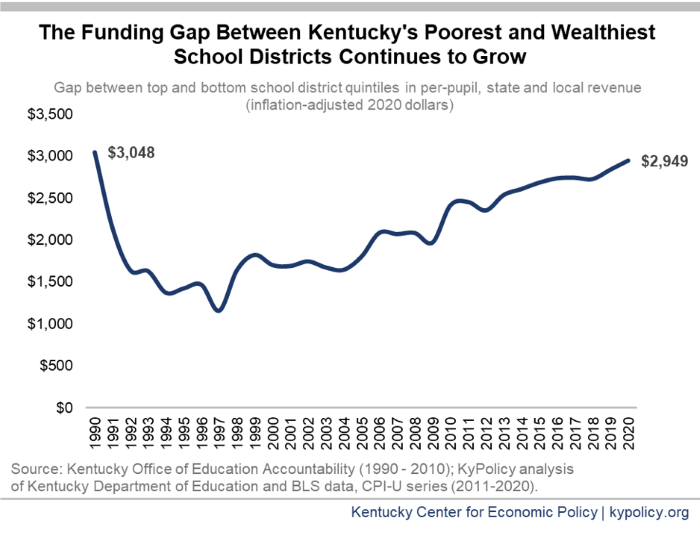
One of the most pressing problems with the current funding model is the increasing inequity among school districts. When the state funding is inadequate, local districts are forced to dig into their own limited resources—leading to a widening gap between wealthier and poorer communities.
How State-Local Funding Shifts Exacerbate Inequity
The SEEK formula’s reliance on both state and local funding means that when state contributions fall short, poorer districts find themselves at a severe disadvantage. In current dollars, the per-pupil funding gap between the top and bottom quintiles of school districts was $4,247 in 2024. Shockingly, this is $508 (or 13.6%) more than what it was back when the Kentucky Education Reform Act in 1990 attempted to tackle these very disparities.
Key Areas Affected by Funding Gaps
- Classroom Sizes: Overcrowded classrooms are a direct consequence of insufficient funding, limiting the amount of individual attention each student can receive.
- Student Supports: Programs designed to help struggling students are often the first to face cuts when budgets are tight.
- Extracurricular Activities: These enriching experiences, which play a crucial role in student development, may also face reductions.
Teacher Shortages and Budget Cuts: The Classroom Reality
The impact of underfunding is perhaps most palpable in the classroom, where teacher shortages and squeezed budgets have real consequences. Many educators are now facing working conditions loaded with issues that go beyond student behavior or curriculum challenges. These conditions include stagnant wages and limited resources for professional development and classroom materials.
Falling Salaries and the Challenge of Recruitment
For years, Kentucky teachers have seen their salaries decline relative to inflation. Last school year, educators were paid an average of $13,888 less per year (when adjusted for inflation) compared to 2008—a 19.8% decline. This decrease has made attracting and retaining talented teachers particularly challenging. When wages do not keep pace with the cost of living, talented educators may leave for better-compensated opportunities, further exacerbating teacher shortages.
The Impact of Policy Restrictions on Teacher Morale
Recent policy changes have not helped the situation. The new restrictions on communications with students, for example, have been seen as off-putting by educators who feel these measures add an extra layer of pressure without addressing the root causes of what is an overwhelmingly challenging work environment. In a profession already stressed by budget cuts and rising classroom sizes, such policies contribute to a feeling of being overloaded with bureaucratic red tape.
Table: Key Teacher Funding Issues
| Issue | Description | Impact |
|---|---|---|
| Salary Decline | Average pay adjusted down by nearly 20% since 2008. | Difficulty in hiring and retention of quality teachers. |
| Teacher Shortages | Insufficient candidates due to uncompetitive wages. | Increased classroom sizes and reduced individual attention for students. |
| Professional Development | No new funds since 2018 for training or improvement. | Fewer opportunities for teachers to enhance their skills. |
| Compliance Pressures | Policies that add communication restrictions and other challenges. | Lower teacher morale and potentially higher turnover. |
School Transportation and Other Overlooked Essentials
Beyond classroom instruction and teacher compensation, other essential components of the school ecosystem have suffered as well. Transportation, for instance, is a critical service that ensures students have safe and reliable means to get to school. Unfortunately, the funding for transportation—a key portion of the SEEK formula—is significantly underfunded.
Falling Short on Transportation Funding
Despite a state law mandating 100% funding for school transportation, current budgets fund only 82% of what is legally required. This shortfall forces districts to struggle through the task of making up the remainder, often by squeezing funds from other vital areas. The ongoing suspension of the full statutory requirement has only deepened this problem, meaning that many rural or poorer districts are left grappling with inadequate transportation options.
Additional Services on Ice
In addition to transportation, several other services have remained frozen at outdated levels. Preschool funding, for example, has not seen an adjustment since 2019, nor has funding for afterschool programs or teacher-specific support initiatives like textbooks and professional development. Without regular updates to these funding streams, schools are left to manage with resources that do not address modern educational demands.
Federal Funding Uncertainty: The Post-COVID Era and Its Ripple Effects
While state funding issues are serious enough on their own, Kentucky’s schools face an additional layer of uncertainty stemming from federal funding challenges. After a period of historic intervention through federal COVID relief programs, many districts now find themselves contending with fresh budget deficits and the loss of crucial support.
The End of the Federal COVID Relief Era
From 2020 through the CARES Act, federal relief funds known as the Elementary and Secondary School Emergency Relief (ESSER) played a super important role in shoring up Kentucky’s K-12 education. With a hefty allocation of $3.1 billion, these funds enabled districts to address pressing COVID-related issues, including urgent staffing needs, wage enhancements, and essential student supports. However, as these funds have dwindled, schools have struggled to recoup the investments they made during the pandemic.
Budget Deficits and “Fiscal Cliff” Problems
The abrupt disappearance of federal ESSER funds created a financial cliff for many districts. Without the cushioning effect of these funds, districts have been forced into making difficult decisions, often involving staff reductions and cuts to critical programs. Multiple districts—ranging from Fayette County Public Schools to Woodford County Public Schools—have reported multi-million-dollar budget deficits, directly tied to the lack of stable federal support.
Federal Actions that Compound State Funding Woes
Recent federal moves have also introduced a new layer of uncertainty. Actions such as the early rescission of allocated ESSER funds for construction projects and school buses, as well as the temporary freezing of $87 million in Department of Education grants for the upcoming school year, have created a sense of unease among school administrators. Although some of these funds were eventually released, the uncertainty remains, leaving school districts in a state of anxiety as they try to plan for the future.
The Ripple Effects on Rural and High-Need Schools
Federal funding typically represents a significant portion of the overall budget for many Kentucky schools, particularly in rural areas and within districts serving high-needs populations. These schools have long depended on federal dollars to supplement local and state contributions. With the fading of COVID relief funds and the fog of ongoing federal limitations, the most vulnerable schools shoulder a disproportionate share of the burden.
Disproportionate Impact on Rural Districts
For many rural districts, federal dollars are not just an add-on—they are a critical lifeline. With fewer local resources to fall back on, these schools are at greater risk when federal funding becomes unpredictable. The uncertainties in federal grants and relief measures have put these districts in a precarious position, where even small funding cuts can lead to significant lost opportunities for student growth and community enrichment.
Challenges for Schools Serving High-Needs Students
Schools that cater to high-needs populations are also hit hard by funding uncertainties. These institutions rely on additional support to manage the extra challenges faced by their students. Federal funds are super important to help implement programs that provide tutoring, mental health services, and extracurricular activities that can bridge some of the educational gaps. When these dollars vanish or become unpredictable, students who are already at a disadvantage suffer the most.
Recommendations for a More Stable Educational Future
The current funding landscape in Kentucky is replete with tangled issues—from an ever-widening funding gap between the richest and poorest districts to the disappearance of key federal funding sources. However, there are pathways to a more secure future that require a recommitment to robust, sustained investment in public education.
Substantial Increases in SEEK Funding
One of the most critical steps forward is for the state to significantly boost its commitment to the SEEK formula. A sizable increase in state funding, one that ideally moves closer to the funding levels last seen in 2008 (when adjusted for inflation), could help alleviate many of the current stresses on districts. With such increases, schools would be in a better position to reduce classroom sizes, hire more qualified teachers, and effectively invest in student support services.
Full Funding for Transportation and Beyond
Restoring full statutory funding for school transportation is a must. Given the existing gap where only 82% of the required transportation funds are provided, it is clear that passing legislation to meet the 100% mark would directly benefit students by ensuring safe, reliable access to education. Let’s not forget that proper transportation is a simple yet super important part of a school’s overall support system.
Reinvesting in Teacher Support and Professional Development
Investments should also be made in teacher support initiatives. This means not only restoring and increasing salaries to attract and retain quality educators but also funding essential professional development programs. Teachers are on the frontline of shaping the future, and ensuring they have access to training, quality classroom materials, and manageable workloads is key to making our education system more robust and responsive.
Stabilizing Federal Aid and Seeking New Funding Solutions
Given the current environment of federal uncertainty, Kentucky should be proactive in seeking alternative funding mechanisms that provide long-term stability. This might include exploring new state-level initiatives or public-private partnerships designed to cushion the blow when federal funds fall short. By diversifying revenue streams, districts would have a more stable financial base upon which to plan their budgets and educational programs.
Table: Policy Recommendations and Expected Benefits
| Policy Change | Action | Expected Benefit |
|---|---|---|
| Increased SEEK Funding | Boost state funding to approach 2008 real-value levels. | Improved class sizes, better teacher pay, and enhanced student supports. |
| Full Transportation Funding | Allocate adequate funds to meet 100% statutory requirements. | Reliable school transportation and reduced burden on local districts. |
| Teacher Support Initiatives | Ensure consistent funding for professional development and salary increases. | Enhanced teacher recruitment, retention, and classroom effectiveness. |
| Diversified Federal Funding Strategy | Develop alternative revenue streams to compensate for federal funding volatility. | Greater financial stability and reduced program cuts during federal funding gaps. |
Community and Political Will: The Driving Force for Change
The challenges facing Kentucky’s education system are rooted not only in the numbers on the budget but also in the broader political and community context. The interplay between state budgets, local priorities, and federal policies creates a tangled web full of problems that require collaboration at every level. Parents, educators, and community leaders must work together to urge policymakers to prioritize education funding as a matter of state—and national—importance.
Grassroots Advocacy and Public Engagement
For lasting change, community engagement is key. Grassroots advocacy can help shine a light on the tricky parts of the funding system that are often overlooked by those in decision-making positions. Organizing town hall meetings, facilitating discussions between educators and policymakers, and mobilizing community support can all create the political pressure necessary to shift funding priorities toward a more equitable and stable model.
Importance of Transparent Budget Discussions
Transparency in budget discussions is another super important factor. When the public is made aware of the financial constraints and the potential consequences for their local schools, there is likely to be greater support for initiatives aimed at increasing education funding. Open dialogue between state officials, school administrators, and community members can help ensure that the real needs of students are not lost amidst the many twists and turns of political debate.
Looking Forward: A Call for Comprehensive Educational Reform
While the immediate challenges are daunting, there is hope in a comprehensive approach that reimagines the state’s commitment to education. The current funding shortfalls and inequities demand that Kentucky reexamine its priorities and invest in a future that does not leave any student behind. By addressing both the superficial symptoms and the deeper tangled issues within the funding system, policymakers can help create an environment where every student has access to quality education.
Steps Toward a Comprehensive Reform Agenda
A true overhaul of the education funding system would involve several off-putting yet necessary steps:
- Revising the SEEK Formula: A thorough evaluation of the current funding formula is required, one that considers modern challenges and provides flexibility for emerging needs.
- Long-Term Federal Funding Solutions: Encouraging the federal administration to create more sustainable relief measures can help buffer schools against abrupt funding cliffs.
- Enhanced Accountability Measures: Implementing transparent reporting systems to monitor how funds are utilized will help build trust among the community and ensure that resources are directed where they are needed most.
- Community Partnerships: Forming strategic alliances between public schools, local businesses, and community organizations can create alternative support networks that supplement state and federal funding.
Investment in the Future as a Must-Have for Growth
Ultimately, a reformed education funding system is not just a luxury or an optional improvement—it is a must-have investment in Kentucky’s future. Every dollar spent on education yields long-term benefits for society, including a more skilled workforce, reduced social disparities, and enhanced economic security. For the children of Kentucky, who stand to inherit the decisions made today, this investment is crucial for ensuring that they are well-prepared to meet the challenges and opportunities of tomorrow.
Conclusion: Steering Through Uncertainty Toward a Brighter Tomorrow
The path ahead for Kentucky’s education system is laden with challenges that include inadequate funding, significant inequities, and the unpredictable nature of federal aid. However, by acknowledging the tangled issues in our current approach and taking bold steps toward comprehensive reform, we can begin to make progress. Increasing SEEK funding, ensuring full transportation support, investing in teacher development, and stabilizing federal aid are not just fixes—they are necessary investments in the future of every Kentucky child.
It is currently up to the collective will of the community—parents, teachers, administrators, and lawmakers—to figure a path that values education as a key component of our state’s success. Let us work together to create an education system that is well-funded, equitable, and prepared to support every student. While the challenges are overwhelming, the opportunity to dig into these issues and emerge with a stronger, more resilient system is both compelling and necessary.
As the new school year begins, let this moment serve as a rallying point for all who believe that every child in Kentucky deserves a quality education. With coordinated effort and a renewed commitment to transparency and accountability, we can navigate these complicated pieces and ensure that our educational policies are not only reactive but also proactive in building a brighter future for generations to come.
Originally Post From https://kypolicy.org/education-funding-in-kentucky-remains-inadequate-inequitable-and-uncertain-as-kids-head-back-to-school/
Read more about this topic at
States Face Uncertainty as an Estimated $6.2 Billion in K– …
Enrollment decline hits school funding, triggers cuts

